
Why Are There So Many Ticks in Platte Woods, Missouri?
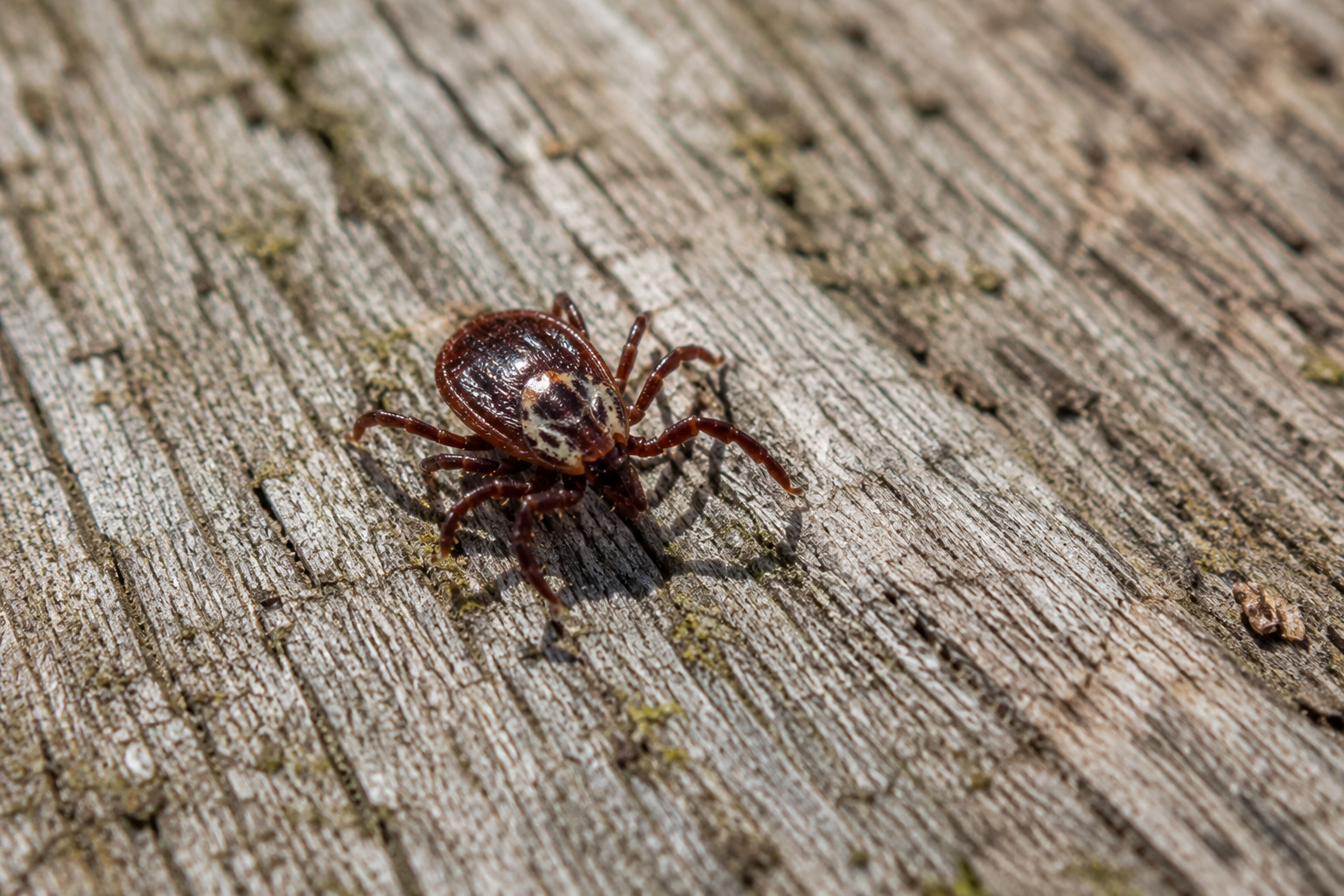
Quick Answer: Ticks are especially common in Platte Woods, Missouri because the community has many of the conditions they need to thrive: mature trees, shaded landscapes, wildlife such as deer and rodents, humid spring and summer weather, and residential properties that border natural habitat. While homeowners can’t eliminate ticks entirely, reducing tick habitat through proper yard maintenance and proactive prevention can significantly lower tick activity around the home.
If you’ve noticed more ticks on your pets, clothing, or around your yard, you’re not imagining it. Many homeowners in Platte Woods experience increased tick activity during the warmer months, particularly in properties with wooded edges, heavy landscaping, or frequent wildlife traffic. Understanding why ticks are so common—and what attracts them—is the first step toward reducing your family’s exposure.
Why Platte Woods Is an Ideal Environment for Ticks
Platte Woods is known for its mature trees, established neighborhoods, and natural green spaces. While these features make the community beautiful, they also create ideal habitat for ticks.
Ticks don’t live in the middle of sunny lawns. Instead, they prefer shaded, humid environments where they can wait for a host to brush past. According to the University of Missouri Extension, wooded edges, leaf litter, tall vegetation, and areas frequented by wildlife are among the most common tick habitats.
Conditions That Support Tick Populations
- Mature trees that provide shade throughout the day
- Leaf litter that traps moisture
- Dense landscaping and ornamental shrubs
- Properties bordering wooded areas
- Creeks, drainage corridors, and natural greenbelts
- Regular deer and rodent activity
Even beautifully maintained yards can experience tick problems if they border suitable habitat.
What Types of Ticks Live in Missouri?
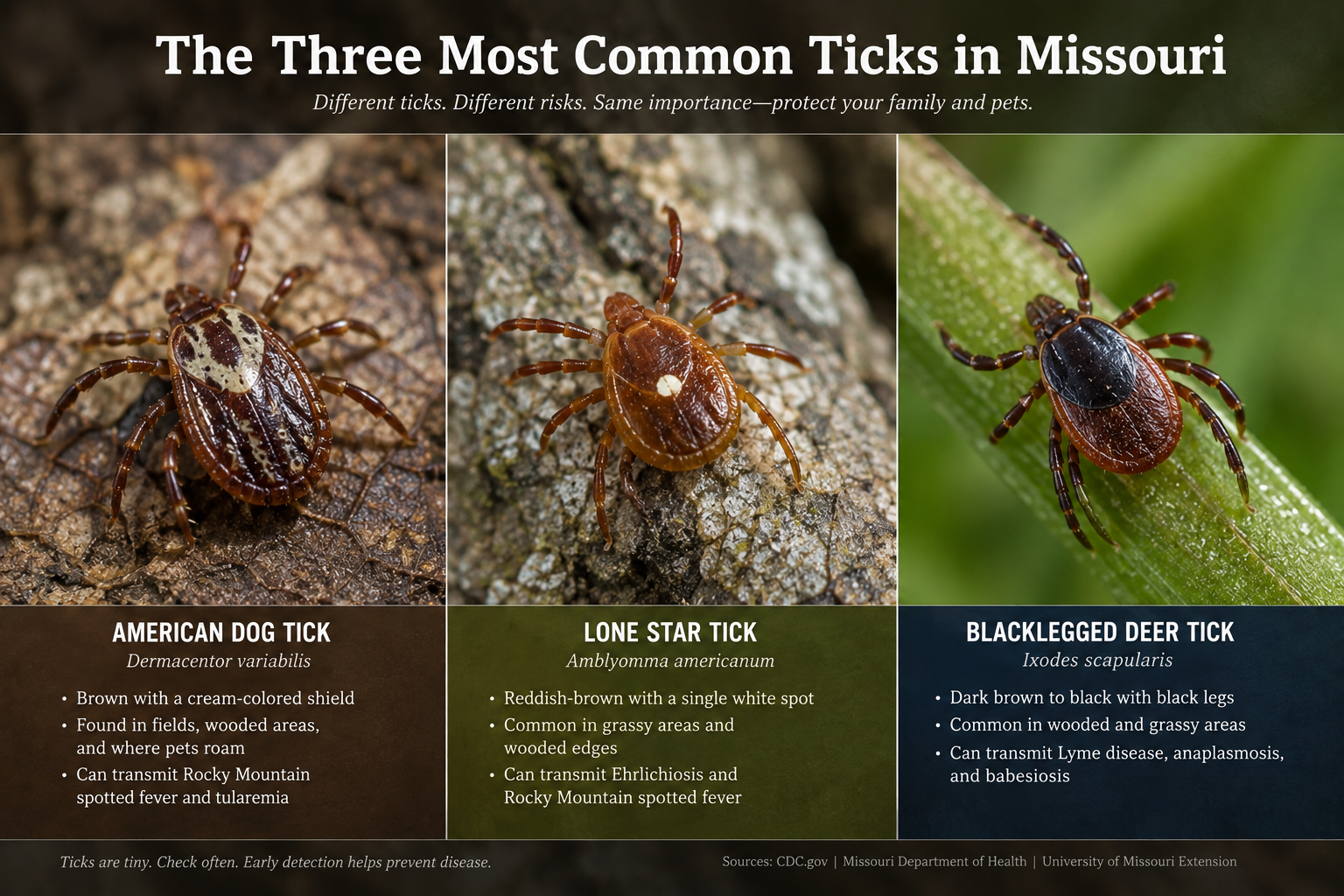
Several tick species are found throughout Missouri, although homeowners are most likely to encounter a few common varieties.
- American dog tick
- Lone star tick
- Blacklegged (deer) tick
Each species has slightly different habitat preferences, but all benefit from shaded areas, wildlife hosts, and seasonal moisture.
Why Are There More Ticks Some Years Than Others?
Many residents notice that one summer seems much worse than the previous one. That’s because tick populations are heavily influenced by environmental conditions.
Several Factors Can Increase Tick Numbers
- Mild winters allow more ticks to survive.
- Wet springs increase humidity and vegetation.
- Healthy deer populations provide feeding opportunities.
- Rodents and rabbits serve as additional hosts.
- Long periods of warm weather extend tick activity.
Weather patterns often explain why one season feels significantly worse than another.
Where Are Ticks Most Likely to Be Found Around Your Property?
Ticks rarely sit in the middle of an open lawn. Instead, they gather where moisture and vegetation provide protection.
Common Tick Hotspots
- Wood lines
- Fence rows
- Landscape beds
- Tall grass
- Brush piles
- Leaf litter
- Areas where pets regularly explore
Pay particular attention to transitions between maintained lawns and wooded areas.
Do Deer Really Bring Ticks Into Neighborhoods?
Yes. Deer are one of the primary hosts for adult ticks and play an important role in spreading tick populations throughout suburban neighborhoods. While deer don’t create ticks, they transport them across large areas, allowing new populations to establish.
Rodents, rabbits, squirrels, and other wildlife also contribute by feeding immature ticks.
How to Reduce Tick Habitat Around Your Home
Complete tick elimination isn’t realistic, but homeowners can make their property much less attractive.
1. Mow Regularly
Keep grass short to reduce humidity near the ground.
2. Remove Leaf Litter
Leaves hold moisture and provide excellent hiding places.
3. Trim Shrubs and Vegetation
Increase airflow and sunlight around the home.
4. Create a Buffer Zone
Where practical, use mulch or gravel borders between wooded areas and frequently used portions of the yard.
5. Limit Wildlife Attractions
- Secure garbage containers.
- Store bird seed properly.
- Remove unnecessary brush piles.
How to Protect Your Family and Pets
Reducing tick habitat is important, but personal protection matters too.
- Perform tick checks after spending time outdoors.
- Use veterinarian-recommended tick prevention for pets.
- Wear long pants when walking through tall vegetation.
- Shower soon after outdoor activities.
- Inspect children carefully after playing outside.
The Centers for Disease Control and Prevention (CDC) recommends checking for ticks as soon as possible after returning indoors.
Can You Prevent Ticks Without Professional Help?
Many homeowners successfully reduce tick activity by maintaining their property and following preventative practices. However, properties with extensive woods, frequent wildlife traffic, or consistently high tick activity may require additional measures to achieve meaningful results.
When Should You Consider Professional Tick Management?
If you regularly find ticks despite maintaining your yard, or if your property borders wooded areas where tick pressure remains high, it may be worthwhile to have your property evaluated. Professional tick management typically focuses on treating high-risk areas where ticks are most likely to live rather than treating the entire lawn indiscriminately.
Frequently Asked Questions
Are ticks active all summer?
Yes. Tick activity typically begins in spring and continues through summer into early fall.
Do ticks live in short grass?
They prefer taller vegetation and shaded areas but may cross mowed lawns while searching for a host.
Can my dog bring ticks into the house?
Absolutely. Pets are one of the most common ways ticks enter homes.
Does every wooded yard have ticks?
Not necessarily, but wooded properties generally have a higher risk than open, sunny lots.
Key Takeaways
- Platte Woods provides ideal habitat for ticks because of mature trees, shade, wildlife, and seasonal humidity.
- Most ticks are found along wooded edges, landscape beds, and tall vegetation—not open lawns.
- Routine yard maintenance can significantly reduce tick habitat.
- Protecting pets and performing regular tick checks are important throughout tick season.
- Persistent tick problems may require additional management strategies.
Protecting Your Platte Woods Property
Living in a beautiful, wooded community like Platte Woods comes with many benefits, but it also means paying closer attention to outdoor pests such as ticks. Combining smart landscaping practices with seasonal prevention can dramatically reduce tick activity and help your family enjoy the outdoors with greater peace of mind.
If you’re finding ticks regularly around your property despite taking preventative measures, Pledge Pest Control can help evaluate your yard and identify areas where ticks are most likely to live, allowing you to make informed decisions about protecting your outdoor spaces.